New Bernstein Node Established in Bonn-Cologne: Boosting Computational Neuroscience in the Rheinland Region
Bonn/Cologne, Germany – The Bernstein Node Bonn-Kö...
University of Bonn to Host New Research Training Group Around €6.1 million is being made available to fund research into drug-resistant epilepsy.
The German Research Foundation (DFG) is setting up...
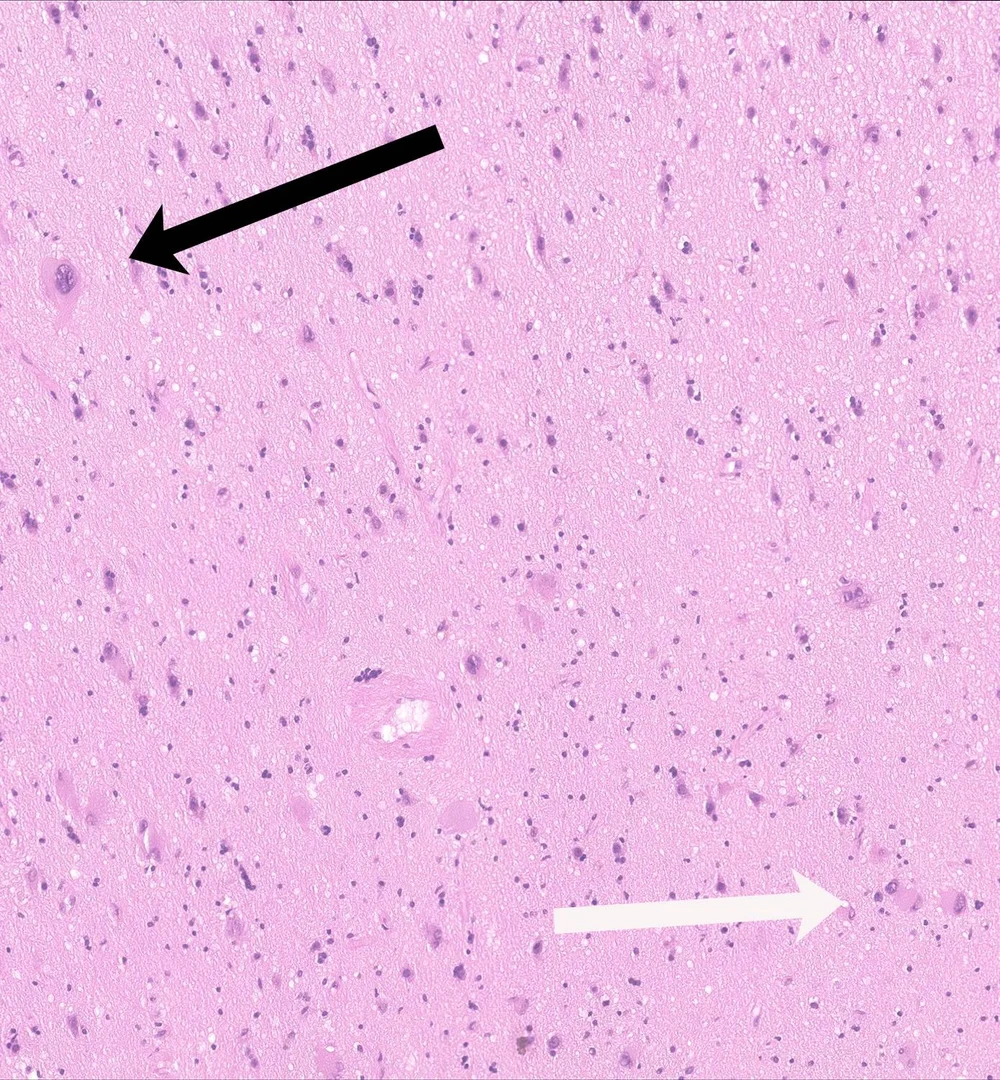
Biopsy slide from epilepsy surgery, showing a focal dysplasia consisting of significantly enlarged, malformed nerve cells (black arrow) and “balloon cells,” whose nucleus is not located in their center (white arrow). Illustration: Annika Breuer/Department of Epileptology, University Hospital Bonn
Prof. Frank Bradke Inducted into the North Rhine–Westphalia Academy of Sciences and Arts
Prof. Dr. Frank Bradke—Senior Group Leader at the ...
Frank Bradke Elected to the Berlin-Brandenburg Academy of Sciences and Humanities
Prof. Dr. Frank Bradke, neurobiologist at the Germ...
Tobias Ackels receives Paul Ehrlich and Ludwig Darmstaedter Early Career Award 2025
We warmly congratulate our group leader Dr. Tobias...
Und plötzlich feuert das Gehirn: Erinnerung
Wie entsteht Erinnerung? Unser Kollege Florian Mor...
Paul Ehrlich and Ludwig Darmstaedter Early Career Award 2025 Goes to Tobias Ackels
Tobias Ackels awarded for pioneering research on s...
Genetic and environmental risk factors cooperate to affect autistic like neuronal phenotypes
Researchers at the University of Bonn have reveale...
Exome sequencing of 20,979 individuals with epilepsy reveals shared and distinct ultra-rare genetic risk across disorder subtypes
New insights from the Epi25 Collaborative highligh...
Region-specific spreading depolarization drives aberrant post-ictal behavior
Bonn researchers uncover how seizure-related focal...
Bonn Neuroscience
Welcome to the Bonn Center of Neuroscience (BCN), the central network for neuroscience at the University of Bonn. At the BCN, more than 300 scientists share a passion for understanding the brain, the most complex and fascinating organ in mammals. The brain allows the organism to perceive and memorize their surroundings, make decisions based on these percepts and convert them to complex behaviors. BCN scientist pursue intellectually ambitious approaches to clarify underlying mechanisms on levels ...
News

Bonn/Cologne, Germany – The Bernstein Node Bonn-Köln, also known as Computational Neuroscience Rheinland, has been launched as a leading hub for computational and systems neuroscience in Germany. It unites over 50 research groups from the Universities of Bonn and Cologne, the German Center for Neurodegenerative Diseases (DZNE), and several Max Planck Institutes. The node focuses on a wide range of topics, from theoretical modeling and neuronal dynamics to systems and cognitive neuroscience. Key research areas include information processing in the brain, synaptic plasticity, neural coding, and modeling of both healthy and diseased nervous systems—addressing disorders such as epilepsy, movement disorders, and anxiety. With more than ten ERC grantees and other distinguished researchers, the initiative promotes interdisciplinary collaboration and excellence in brain research. Among the prominent contributors are: This new Bernstein Node strengthens Germany’s computational neuroscience landscape by fostering knowledge exchange, training young scientists, and advancing innovative approaches to neurological challenges. For more details, visit compneurorheinland.de or bernstein-network.de.
Biopsy slide from epilepsy surgery, showing a focal dysplasia consisting of significantly enlarged, malformed nerve cells (black arrow) and “balloon cells,” whose nucleus is not located in their center (white arrow). Illustration: Annika Breuer/Department of Epileptology, University Hospital Bonn
The German Research Foundation (DFG) is setting up a new Research Training Group (RTG) at the University of Bonn. Entitled “Entwicklung und Epileptogenese von Dysplasien im Zusammenspiel distinkter ZNS-Zelltypen” (“Development and Epileptogenesis of Dysplasias in the Interplay of Distinct CNS Cell Types”), the program for doctoral students will see early-career researchers investigate experimental approaches for treating forms of epilepsy that do not respond to existing treatments. The DFG is to fund the RTG to the tune of some €6.1 million over the next five years. Focal cortical dysplasias (FCDs) are areas of congenital abnormal development in the cerebral cortex that emerge in the embryo while the brain is developing. They can cause epilepsy as well as cognitive and behavioral disorders that are particularly hard to treat with drugs. Findings have shown that communication between nerve cells and blood vessels and cooperation between macrophages and neurons play a role in FCDs, as do the adaptability of synapses and the transmission of signals by chemical messengers. The recently approved RTG “Entwicklung und Epileptogenese von Dysplasien im Zusammenspiel distinkter ZNS-Zelltypen” is setting out to understand these mechanisms and develop potential experimental treatments. “Our Research Training Group will enable us to train doctoral students from the fields of life sciences and medicine where basic science meets clinical practice,” explains the RTG’s speaker, Professor Albert Becker from the Institute of Cellular Neurosciences II at the University of Bonn. “Getting the full research picture about cortical dysplasias requires knowledge drawn from a range of specialist disciplines. If we’re to generate knowledge that can be used to develop treatments in the future, we’re going to need researchers who know their respective field like the back of their hand. Our projects have a transdisciplinary structure and give the doctoral students the chance to carve out their own neuroscientific profiles.”...
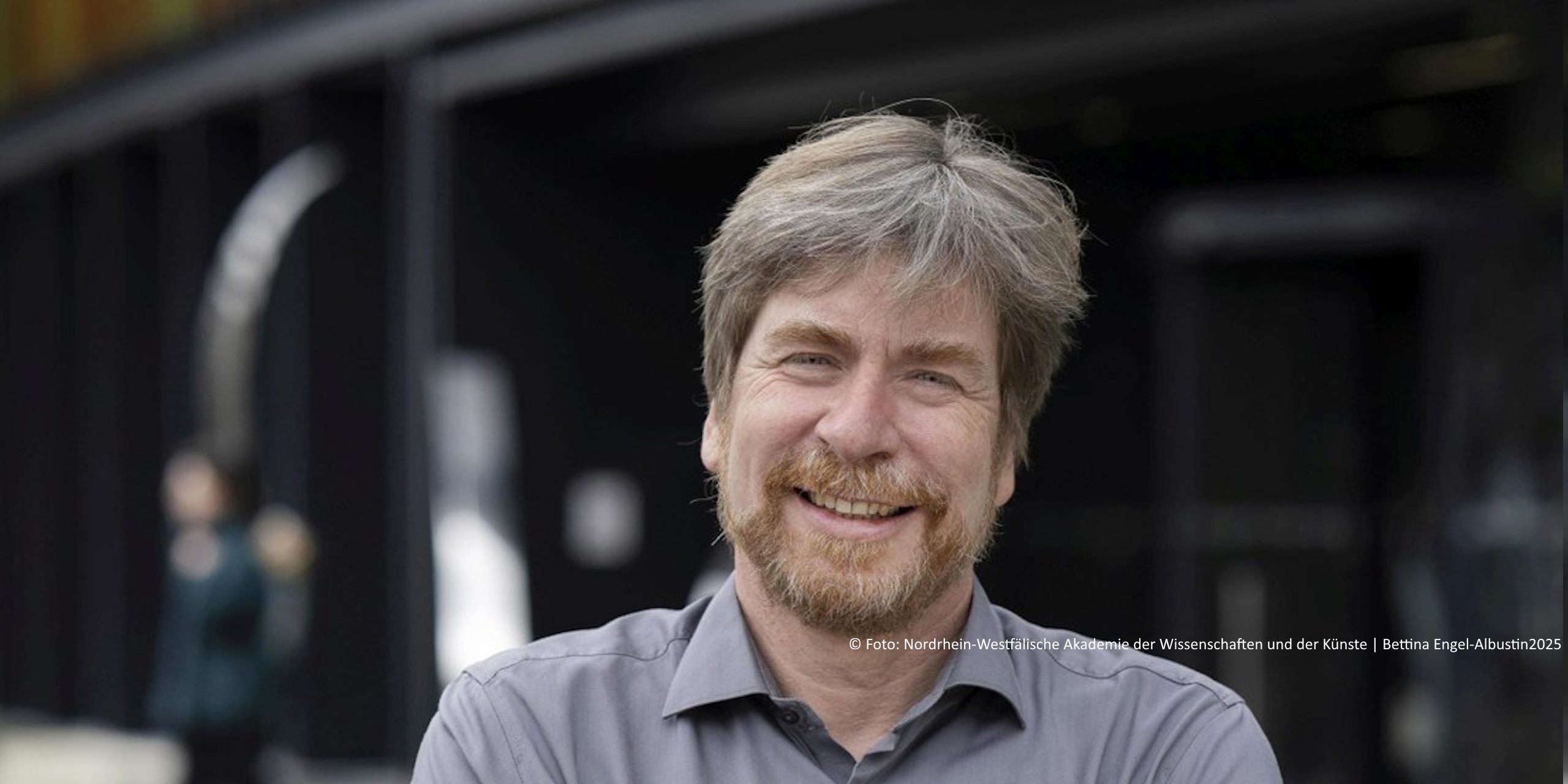
Prof. Dr. Frank Bradke—Senior Group Leader at the DZNE and Professor at the University of Bonn—has been welcomed as a new member of the North Rhine–Westphalia Academy of Sciences and Arts. He received his certificate from the Academy’s President, Prof. Dr. Gerd Heusch, in a ceremony held earlier this year. Bradke’s research focuses on the molecular and cellular mechanisms behind axonal growth and regeneration in the central nervous system—work that underpins his standing as a leading international neurobiologist . He studied biochemistry, anatomy, and developmental biology in Berlin and London, completed his PhD at EMBL Heidelberg, and conducted postdoctoral research at UCSF and Stanford. Prior to his current roles, he led a research group at the Max Planck Institute in Martinsried. He has been a member of the Leopoldina since 2014 and was awarded the prestigious Gottfried Wilhelm Leibniz Prize in 2016. —For more details, see the University of Bonn announcement:https://www.uni-bonn.de/de/neues/frank-bradke-in-die-nrw-akademie-der-wissenschaften-und-der-kuenste-aufgenommen
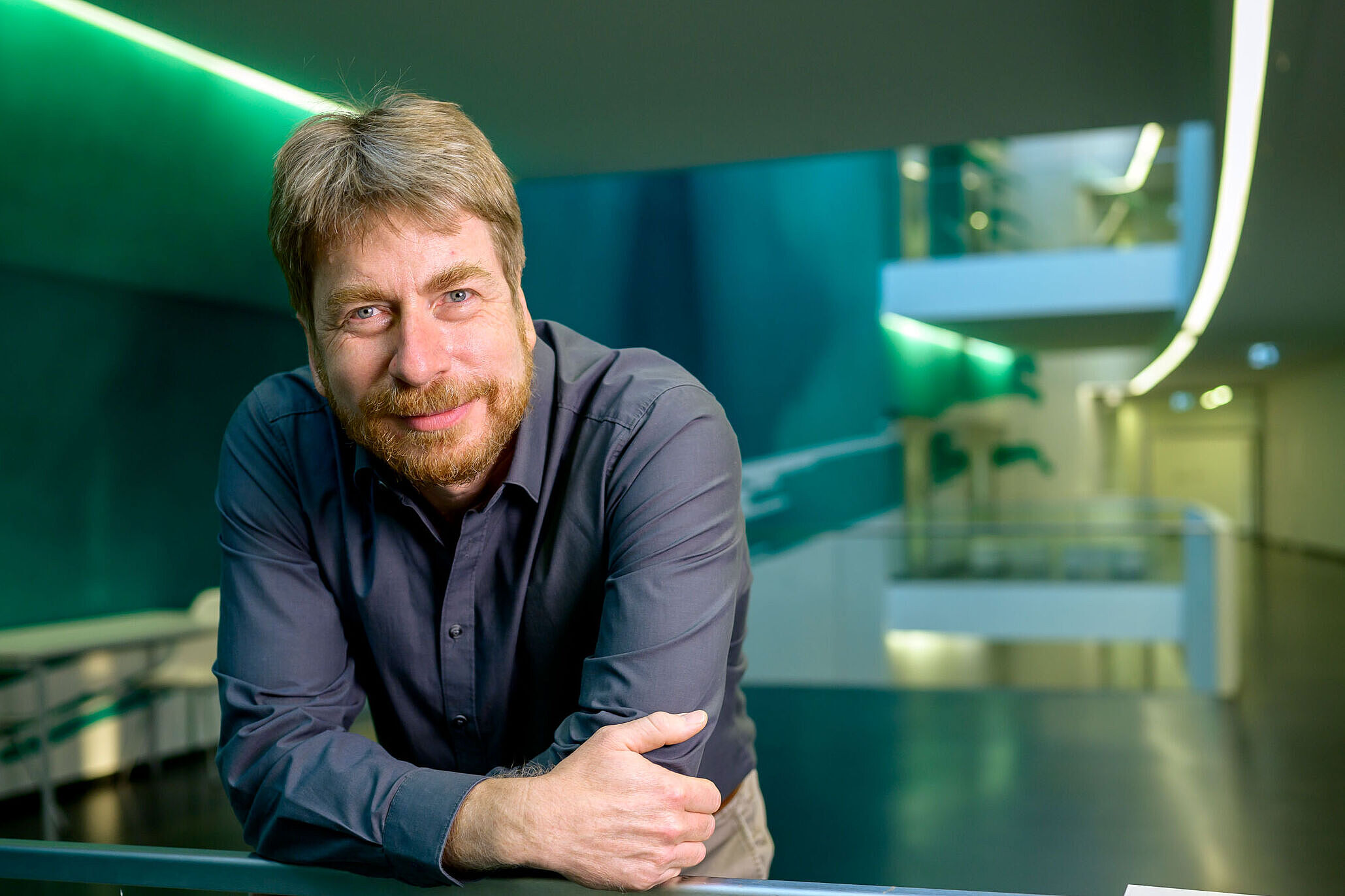
Prof. Dr. Frank Bradke, neurobiologist at the German Center for Neurodegenerative Diseases (DZNE) and professor at the University of Bonn, has been elected to the Berlin-Brandenburg Academy of Sciences and Humanities (BBAW). The induction ceremony took place on June 14, 2025, in Berlin. Bradke is internationally recognized for his research on axonal growth and nerve regeneration in the central nervous system, particularly following spinal cord injuries. His work combines cellular models with animal studies to uncover mechanisms that promote or inhibit neuronal repair. Among many honors, he received the Leibniz Prize (2016), the Roger de Spoelberch Prize (2018), and the BBAW Academy Award (2024). He is a member of several leading scientific organizations, including the Leopoldina and the Academia Europaea. More information:
Bonn/Cologne, Germany – The Bernstein Node Bonn-Köln, also known as Computational Neuroscience Rheinland, has been launched as a leading hub for computational and systems neuroscience in Germany. It unites over 50 research groups from the Universities of Bonn and Cologne, the German Center for Neurodegenerative Diseases (DZNE), and several Max Planck Institutes. The node focuses on a wide range of topics, from theoretical modeling and neuronal dynamics to systems and cognitive neuroscience. Key research areas include information processing in the brain, synaptic plasticity, neural coding, and modeling of both healthy and diseased nervous systems—addressing disorders such as epilepsy, movement disorders, and anxiety. With more than ten ERC grantees and other distinguished researchers, the initiative promotes interdisciplinary collaboration and excellence in brain research. Among the prominent contributors are: This new Bernstein Node strengthens Germany’s computational neuroscience landscape by fostering knowledge exchange, training young scientists, and advancing innovative approaches to neurological challenges. For more details, visit compneurorheinland.de or bernstein-network.de.
Biopsy slide from epilepsy surgery, showing a focal dysplasia consisting of significantly enlarged, malformed nerve cells (black arrow) and “balloon cells,” whose nucleus is not located in their center (white arrow). Illustration: Annika Breuer/Department of Epileptology, University Hospital Bonn
The German Research Foundation (DFG) is setting up a new Research Training Group (RTG) at the University of Bonn. Entitled “Entwicklung und Epileptogenese von Dysplasien im Zusammenspiel distinkter ZNS-Zelltypen” (“Development and Epileptogenesis of Dysplasias in the Interplay of Distinct CNS Cell Types”), the program for doctoral students will see early-career researchers investigate experimental approaches for treating forms of epilepsy that do not respond to existing treatments. The DFG is to fund the RTG to the tune of some €6.1 million over the next five years. Focal cortical dysplasias (FCDs) are areas of congenital abnormal development in the cerebral cortex that emerge in the embryo while the brain is developing. They can cause epilepsy as well as cognitive and behavioral disorders that are particularly hard to treat with drugs. Findings have shown that communication between nerve cells and blood vessels and cooperation between macrophages and neurons play a role in FCDs, as do the adaptability of synapses and the transmission of signals by chemical messengers. The recently approved RTG “Entwicklung und Epileptogenese von Dysplasien im Zusammenspiel distinkter ZNS-Zelltypen” is setting out to understand these mechanisms and develop potential experimental treatments. “Our Research Training Group will enable us to train doctoral students from the fields of life sciences and medicine where basic science meets clinical practice,” explains the RTG’s speaker, Professor Albert Becker from the Institute of Cellular Neurosciences II at the University of Bonn. “Getting the full research picture about cortical dysplasias requires knowledge drawn from a range of specialist disciplines. If we’re to generate knowledge that can be used to develop treatments in the future, we’re going to need researchers who know their respective field like the back of their hand. Our projects have a transdisciplinary structure and give the doctoral students the chance to carve out their own neuroscientific profiles.”...
Prof. Dr. Frank Bradke—Senior Group Leader at the DZNE and Professor at the University of Bonn—has been welcomed as a new member of the North Rhine–Westphalia Academy of Sciences and Arts. He received his certificate from the Academy’s President, Prof. Dr. Gerd Heusch, in a ceremony held earlier this year. Bradke’s research focuses on the molecular and cellular mechanisms behind axonal growth and regeneration in the central nervous system—work that underpins his standing as a leading international neurobiologist . He studied biochemistry, anatomy, and developmental biology in Berlin and London, completed his PhD at EMBL Heidelberg, and conducted postdoctoral research at UCSF and Stanford. Prior to his current roles, he led a research group at the Max Planck Institute in Martinsried. He has been a member of the Leopoldina since 2014 and was awarded the prestigious Gottfried Wilhelm Leibniz Prize in 2016. —For more details, see the University of Bonn announcement:https://www.uni-bonn.de/de/neues/frank-bradke-in-die-nrw-akademie-der-wissenschaften-und-der-kuenste-aufgenommen
Prof. Dr. Frank Bradke, neurobiologist at the German Center for Neurodegenerative Diseases (DZNE) and professor at the University of Bonn, has been elected to the Berlin-Brandenburg Academy of Sciences and Humanities (BBAW). The induction ceremony took place on June 14, 2025, in Berlin. Bradke is internationally recognized for his research on axonal growth and nerve regeneration in the central nervous system, particularly following spinal cord injuries. His work combines cellular models with animal studies to uncover mechanisms that promote or inhibit neuronal repair. Among many honors, he received the Leibniz Prize (2016), the Roger de Spoelberch Prize (2018), and the BBAW Academy Award (2024). He is a member of several leading scientific organizations, including the Leopoldina and the Academia Europaea. More information:
Seminars
11441
Mittwoch
01. 07. 2026
Building C83, Semina...
4:00 p.m.
- 5:30 p.m.
11440
Mittwoch
24. 06. 2026
Building C83, Semina...
4:00 p.m.
- 5:30 p.m.
11466
Donnerstag
21. 05. 2026
Epileptology seminar...
10:00 a.m.
- 11:00 a.m.
11435
Mittwoch
06. 05. 2026
Building C83, Semina...
4:00 p.m.
- 5:30 p.m.
11466
Donnerstag
21. 05. 2026
Epileptology seminar...
10:00 a.m.
- 11:00 a.m.
11465
Donnerstag
23. 04. 2026
Seminar Room 2.082 a...
1:00 p.m.
- 2:00 p.m.
11463
Donnerstag
23. 04. 2026
Online:
https://uni-...
9:00 a.m.
- 10:00 a.m.
11462
Donnerstag
23. 04. 2026
DZNE lecture hall
11:00 a.m.
- 12:00 p.m.
2013
Founded
73
Research Groups
>300
Scientists
Network and Certificates